
How to Teach Kids About Investing (Without Real Money)
Practical ways for parents and teachers to teach kids investing ideas using pretend money and simple games. No real cash or brokerage accounts needed.
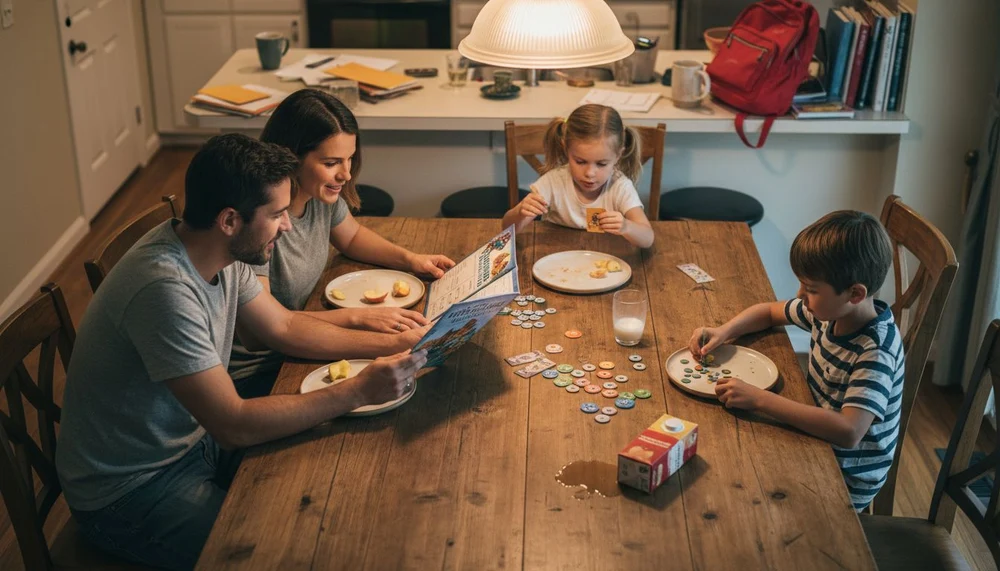
Looking for a free stock market game for kids is a good start. The bigger win is helping kids understand the ideas behind investing long before they ever touch real money.
Teaching kids about investing without real money is not only possible. It is often better. When the stakes are pretend, kids can try things, make mistakes, and feel the ups and downs without any real fear. Money habits and attitudes form early. The goal is not to turn a seven-year-old into a stock picker. The goal is to give them a calm, curious relationship with how money can grow and how choices have consequences.
Here is a practical approach you can start using right away.
Why Skip Real Money at First
Real brokerage accounts, even ones parents control, bring pressure and the chance of actual loss. For most elementary-age kids that pressure kills curiosity. Pretend money keeps the focus on the ideas:
- What is a share?
- Why do prices move?
- What does it mean to own a little piece of something?
- Why is putting everything in one place riskier than spreading it out?
When the only thing at risk is pretend cash or game money, kids stay playful. Play is how they learn best.
The Core Ideas Worth Teaching
You do not need a full finance curriculum. A few big ideas, repeated over time, are enough.
1. Ownership
A stock is a tiny slice of a company. Owning a slice means you hope the company does well. Keep the language simple: “It’s like owning one slice of a giant pizza. If the pizza place gets popular, your slice is worth more.”
2. Prices move for reasons
Good news (a cool new product, more customers) tends to push prices up. Bad news (problems, fewer customers) tends to push them down. Feelings and rumors can move prices too in the short term. This is an easy conversation after any news event in a game.
3. Risk and reward
Bigger possible gains usually come with a bigger chance of going down. Kids get this quickly when they can see it happen on a simple board or chart.
4. Diversification
Don’t put all your eggs in one basket. When a child owns shares in a few different pretend companies, one piece of bad news hurts less. This is one of the most useful ideas you can plant early.
5. Time and patience
Markets bounce around. Short-term drops are normal. The longer view matters more. Multi-round pretend games make this easy to see in one sitting.
Practical Ways to Teach Without Real Money
Use a kids’ stock market simulator
A free browser game built for ages 5 to 12 removes almost all the friction. NewsFlash lets kids buy and sell shares in six made-up companies, react to news events, and watch their pretend net worth change over 10 to 60 rounds. There are no accounts, no ads, and no personal information collected. Everything stays in the browser and disappears when the tab closes. It was made for exactly this kind of learning.
Create a family pretend portfolio
Once a week, let each child “buy” two or three imaginary companies (or real ones they recognize) and track them only on paper. Write down a starting pretend price. During the week, notice any news and adjust the prices together. At the end of the month, talk about what went up, what went down, and why.
Turn everyday news into short conversations
When a company your child knows has good or bad news, ask: “If we owned a tiny piece of that company, do you think the price would go up or down today? Why?” Keep it light. No long lectures needed.
Use board games and simple trading games
Any game that involves money, trading, or limited resources helps practice the same skills: making choices when you are not sure what will happen, and waiting for a better moment.
Tell simple stories
A lot of kids understand stories better than definitions. “Imagine you and your friends each own a piece of a lemonade stand. One day it rains and no one buys anything. The stand is worth less. The next week the weather is perfect and you sell out. Now the stand is worth more.” Then connect it back to the game or the paper portfolio.
Age-Specific Tips
Ages 5–7
Keep it concrete and short. Focus on the words “up” and “down,” the idea of owning a piece of something, and celebrating any decision. Play together on one device. Read the news cards out loud. Ten rounds is often enough. The real win is the conversation, not the final pretend score.
Ages 8–12
You can use a bit more language: average buy price versus current price, diversification, and the difference between a lucky short jump and a longer trend. After price changes, ask “Why do you think that happened?” Try 20 or 30 rounds so they see more movement. Let them explain their thinking back to you. Teaching someone else is one of the fastest ways to lock in the idea.
Common Pitfalls to Avoid
- Turning it into a test. The second it feels like school, curiosity drops.
- Focusing only on who “won.” Talk about good decisions and what they noticed, not just the final number.
- Using real money or real accounts too early. The emotional lessons stick better when the only currency is pretend.
- Over-explaining. Short, repeated talks beat one long lecture.
- Ignoring feelings. Kids notice when pretend prices drop. Name it (“That drop felt annoying, right?”) and keep the conversation going in simple terms.
How NewsFlash Fits In
NewsFlash was built as a practice space for these exact conversations. Kids spin, move around the board, land on companies, read kid-friendly news, decide whether to buy, and watch prices react. They can sell on their turn and see their average cost next to the current price. At the end of the rounds the highest net worth wins, but the real value is the talk that happens along the way.
The game needs no sign-up and collects no personal information, so it stays simple and private. Parents and teachers can open the site and start playing right away.
Getting Started This Week
- Sit down together and play one short game (10 to 20 rounds).
- After each big news event, pause for a few seconds and ask what they notice.
- At the end, talk about one thing that surprised them and one thing they would try differently next time.
- Do it again once or twice in the following weeks. Showing up regularly matters more than long sessions.
You do not need to be a financial expert. You only need to be willing to look at the ideas with your child. Pretend money takes away the fear. Simple words take away the intimidation. Short, repeated experiences build the foundation.
When kids eventually meet real markets, the core ideas (ownership, risk, spreading things out, and patience) will already feel familiar. That familiarity is worth a lot.
For more conversation ideas and age-specific tips, see the Parent Guide.
Want a simple explanation of why prices move? Read Why Stocks Go Up and Down.
Ready to try it yourself?
PLAY NEWSFLASH FREE ⚡